SAFE AND EFFECTIVE
SURGICAL SOLUTIONS
- Laser Hair Reduction
- Chemical Peels
- Acne Surgery
- Micro Needling
- PRP / GFC
- GFC Face
- Botox
- Fillers
- Photo Facial
- Pigmentation & Q-Switched Laser
- PDRN Therapy (Skin Boosters)
- Glutathione / Multivitamin
- Microdermabrasion
- Cryotherapy / Cryo Pairing
- HIFU (High Intensity Focussed Ultrasound)
- Co2 Laser
- Scar Revision
- Tattoo Removal (Using Q-Switched Laser)
- Phototherapy
- Low Level Laser Treatment
- MNRF (Micro Needling Radio Frequency)
- Skin Growths
- Medifacials
- Hair Transplantation
- Keloids
- Lipoma
- Cyst Removal
- Nail Surgery
- Ear Loop Stitches
- Piercing
- Corn
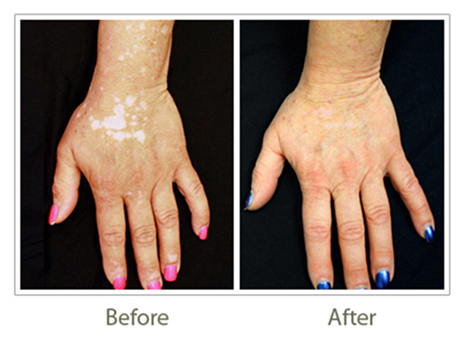
- Vitiligo Surgery
VITILIGO/LEUCODERMA SURGERY
What is it?
Leucoderma is a condition characterised by loss of skin pigment caused by factors like vitiligo, chemical exposure, trauma, or post-burn injuries.
When to consider it?
Surgery is an option when the condition is stable, with no new lesions or expansion of existing ones for a recommended period.
Pre-Procedure Requirements
- Normal blood investigations
- Positive attitude and realistic expectations
Procedure
The duration and type of surgery depend on the size, location, and number of lesions.
Common surgical techniques include:
- Miniature Punch Grafting: Suitable for hands and feet.
- Suction Blister Grafting: Ideal for small lesions on the lips and face.
- Autologous Non-Cultured Melanocyte Suspension: Effective for extensive areas on any part of the body.
- Autologous Non-Cultured Follicular Cell Suspension: Suitable for large or widespread areas.
- Other options include Smash Grafting, FUE, and Excision with Closure.
Post-Procedure Care
Follow-up on the 2nd, 7th, and 15th day, then weekly for phototherapy sessions.