
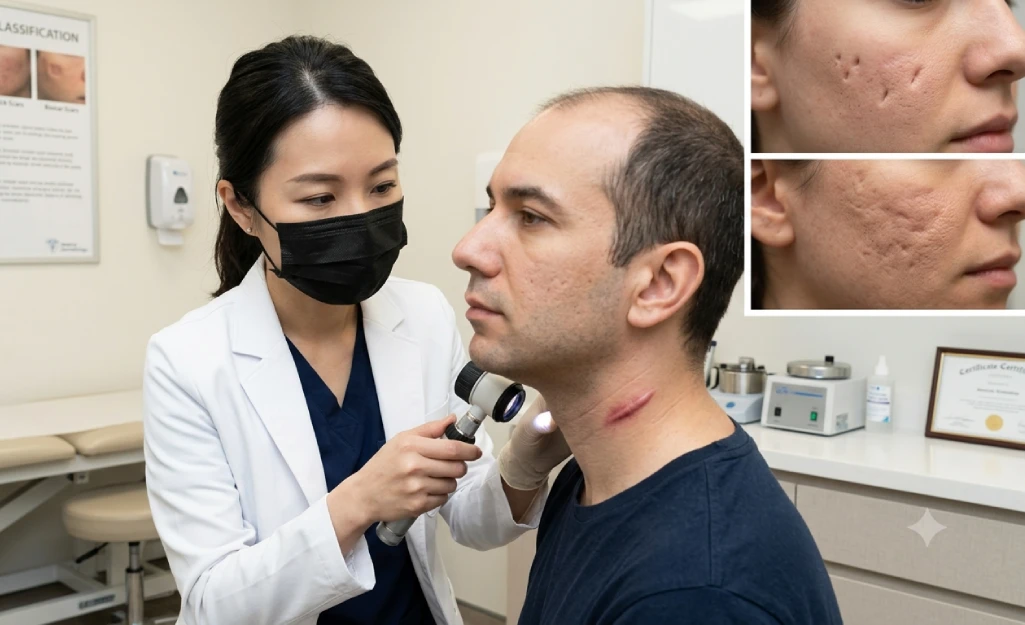
Acne may eventually heal, but for many people, the scars it leaves behind can linger for years. These scars often become a constant reminder of past breakouts impacting self-confidence just as much as active acne itself. Fortunately, major advances in dermatology have made acne scars more treatable than ever before. From laser resurfacing and microneedling to chemical peels and subcision, there are now advanced treatment options that can significantly improve the appearance of acne scars.
However, one important fact is often overlooked that there is no single treatment that works for every type of acne scar. Different scars form in different ways, and each requires a tailored approach. In most cases, the best outcomes are achieved by combining two or more treatments.
Neotis Clinic is widely recognised as a premier clinic for acne scar treatment in Kalyan Nagar, Bengaluru. Your journey begins with a detailed skin assessment to identify the type of scar, its depth, and the patient’s skin type before creating a personalized treatment plan. This comprehensive guide explores the different types of acne scars, the treatments available for each, and how to choose the right approach.
Why Do Acne Scars Form?
Acne scars develop when inflammation damages the deeper layers of the skin.
During the healing process, the body produces collagen to repair the damaged tissue. If too little collagen is produced, depressed (atrophic) scars form. If too much collagen is produced, raised (hypertrophic or keloid) scars may develop.
Several factors influence whether scars form, including:
- Severity of acne
- Delayed treatment
- Picking or squeezing pimples
- Genetics
- Skin healing response
- Recurrent inflammatory acne
Treating active acne early is one of the best ways to reduce the risk of permanent scarring.
Different Types of Acne Scars
Not all acne scars look the same. Dermatologists classify them based on their shape, depth, and the amount of collagen involved.
Understanding the type of scar is the first step toward selecting the most effective treatment.
Ice Pick Scars
Ice pick scars are narrow, deep scars that extend into the skin, giving the appearance of tiny puncture marks.
Characteristics
- Small surface opening
- Deep and narrow
- Often difficult to treat
- Common on the cheeks
Best Treatment Options
- Fractional laser resurfacing
- TCA CROSS (chemical reconstruction of skin scars)
- Microneedling (in selected cases)
- Combination treatments
Because these scars extend deep into the skin, they often require multiple sessions and combination therapy for optimal improvement.
Boxcar Scars
Boxcar scars are wider depressions with sharply defined edges.
They can be shallow or deep and commonly appear on the cheeks and temples.
Characteristics
- Round or oval appearance
- Well-defined borders
- Moderate depth
- Flat base
Best Treatment Options
- Fractional laser resurfacing
- Microneedling
- Radiofrequency microneedling
- Chemical peels (for superficial scars)
- Dermal fillers (in selected patients)
These scars generally respond well to resurfacing procedures.
Rolling Scars
Rolling scars create gentle wave-like depressions across the skin due to fibrous bands pulling the skin downward.
Characteristics
- Broad depressions
- Undulating appearance
- Soft edges
- Uneven skin texture
Best Treatment Options
- Subcision
- Microneedling
- Fractional laser
- Radiofrequency microneedling
- Combination treatments
Subcision is often considered one of the most effective treatments because it releases the fibrous bands responsible for the skin’s uneven appearance.
Hypertrophic Scars
Unlike depressed scars, hypertrophic scars are raised above the skin surface due to excess collagen production.
Characteristics
- Thick
- Raised
- Firm
- Usually remain within the original acne area
Best Treatment Options
- Corticosteroid injections
- Laser therapy
- Silicone-based treatments
- Cryotherapy (in selected cases)
Keloid Scars
Keloids are more aggressive forms of raised scars that extend beyond the original acne lesion.
Characteristics
- Large raised scars
- Continue growing beyond the initial injury
- May itch or become uncomfortable
- More common in genetically predisposed individuals
Best Treatment Options
- Steroid injections
- Laser therapy
- Silicone therapy
- Combination treatments
Because keloids have a higher tendency to recur, they require careful long-term management.
Acne Scar Treatment Options Explained
Modern dermatology offers several procedures that can be combined depending on the type of acne scar.
Fractional Laser Resurfacing
Laser energy stimulates collagen production while improving skin texture.
Best for:
- Boxcar scars
- Rolling scars
- Ice pick scars (combined with other procedures)
Microneedling
Tiny controlled micro-injuries stimulate collagen remodeling.
Best for:
- Mild boxcar scars
- Rolling scars
- Early acne scars
Radiofrequency Microneedling
Combines microneedling with radiofrequency energy to promote deeper collagen remodeling.
Best for:
- Moderate acne scars
- Rolling scars
- Enlarged pores
- Skin texture improvement
Subcision
A specialized procedure that releases fibrous bands beneath rolling scars.
Best for:
- Rolling scars
- Tethered scars
Chemical Peels
Medical-grade acids exfoliate damaged skin and improve pigmentation and superficial scars.
Best for:
- Post-acne pigmentation
- Mild acne scars
- Uneven skin tone
Dermal Fillers
Fillers temporarily elevate depressed scars.
Best for:
- Selected boxcar scars
- Localized depressed scars
TCA CROSS
A highly concentrated acid is applied directly into deep ice pick scars to stimulate collagen formation.
Best for:
- Ice pick scars
Acne Scar Types and Their Treatment Options
| Acne Scar Type | Appearance | Best Treatment Options | Improvement Timeline |
|---|---|---|---|
| Ice Pick | Deep, narrow scars | TCA CROSS, fractional laser, combination therapy | Several months |
| Boxcar | Wide, sharply defined depressions | Fractional laser, microneedling, RF microneedling, fillers | 3–6 months |
| Rolling | Wave-like depressions | Subcision, RF microneedling, fractional laser | 3–6 months |
| Hypertrophic | Raised scar within acne area | Steroid injections, laser therapy | Variable |
| Keloid | Raised scar extending beyond acne | Steroids, laser therapy, silicone therapy | Variable |
| Post-Inflammatory Hyperpigmentation | Dark marks without tissue loss | Chemical peels, laser toning, topical treatments | Weeks to months |
Which Acne Scar Treatment Is the Best?
This is one of the most common questions patients ask, but there isn’t a universal answer.
The best treatment depends on several factors, including:
- Type of acne scar
- Scar depth
- Number of scars
- Skin type
- Active acne status
- History of pigmentation
- Previous treatments
- Individual healing response
For example:
- Rolling scars often respond best to subcision combined with laser or microneedling.
- Ice pick scars may require TCA CROSS along with laser resurfacing.
- Boxcar scars often improve with fractional laser or radiofrequency microneedling.
- Raised scars usually require steroid-based treatments rather than resurfacing procedures.
In many patients, a combination of treatments produces significantly better results than relying on a single procedure. This is why a dermatologist’s evaluation is essential before beginning treatment. A personalized treatment plan ensures that each scar type is addressed with the most appropriate technique, maximizing improvement while minimizing unnecessary procedures.
When Should You See a Dermatologist?
Many people wait until acne has completely healed before seeking help for scars, but early evaluation can often improve treatment outcomes.
You should consider consulting a dermatologist if:
- Acne scars are affecting your confidence.
- You have deep pits or uneven skin texture.
- Dark acne marks are not improving after several months.
- You continue to develop new acne alongside existing scars.
- Over-the-counter products have not delivered noticeable improvement.
- Raised or thick scars are increasing in size.
- You want to prevent new scars from forming while treating active acne.
The sooner the underlying acne is controlled and the scars are assessed, the more treatment options are usually available.
Can Acne Scars Be Completely Removed?
This is another common question and one that deserves an honest answer.
While today’s dermatological treatments can produce significant improvement, no procedure can completely erase every acne scar.
The goal of treatment is to:
- Smooth uneven skin texture.
- Reduce scar depth.
- Improve overall skin appearance.
- Stimulate healthy collagen production.
- Restore confidence by making scars far less noticeable.
With the right combination of treatments and realistic expectations, many patients experience a dramatic improvement in both skin texture and overall complexion.
Transform Acne Scars with the Right Treatment at Neotis Skin Care Clinic
Every acne scar tells a different story, which is why successful treatment begins with understanding exactly what type of scar you’re dealing with. Choosing the right procedure—or combination of procedures—can make a significant difference in the final outcome.
At Neotis Skin Care Clinic, in Kalyan Nagar, Bengaluru, acne scar treatment is never based on a standard protocol. Each patient undergoes a detailed skin evaluation to assess scar type, severity, skin tone, and treatment goals before a personalized plan is created.
If acne scars are preventing you from feeling confident in your skin, booking a consultation at Neotis Skin Care Clinic is the first step toward understanding your treatment options and starting a customized journey to smoother, healthier-looking skin.
