
Dealing with chronic skin conditions such as psoriasis, vitiligo, eczema, and certain inflammatory disorders can significantly affect a person’s quality of life. While topical creams and oral medications remain important treatment options, many patients require a more targeted approach to manage persistent symptoms and achieve long-term improvement.
One such treatment is phototherapy, a clinically proven targeted approach that uses controlled ultraviolet (UV) light exposure to treat a variety of skin conditions. Over the years, phototherapy has become a trusted treatment option for patients who do not respond adequately to conventional therapies or who require a steroid-sparing solution.
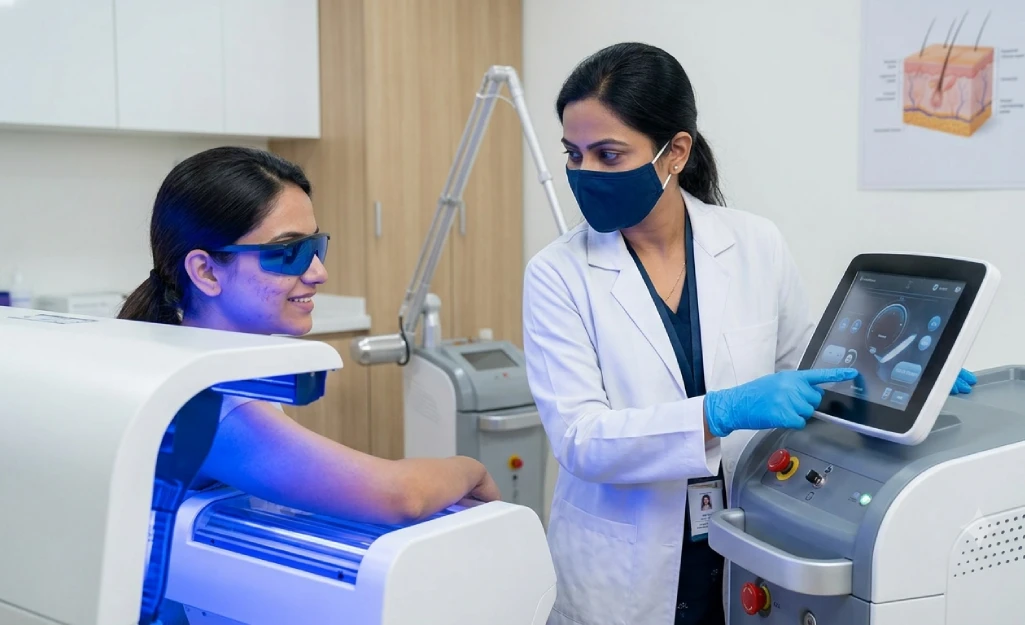
At Neotis Skin Care Clinic, Bengaluru, phototherapy is recommended for carefully selected patients after a thorough dermatological evaluation. The clinic offers full-body phototherapy for widespread skin conditions as well as targeted excimer laser phototherapy for localized and resistant patches, allowing treatment to be tailored according to the type, severity, and extent of the skin condition. Understanding how phototherapy works, the conditions it can treat, the different treatment options available, and the results you can expect can help you make an informed decision about your treatment journey.
What Is Phototherapy?
Phototherapy is a medical treatment that involves exposing the skin to specific wavelengths of ultraviolet light under controlled conditions and medical supervision.
Unlike natural sunlight exposure, phototherapy delivers precise doses of UV light using specialized equipment. This allows dermatologists to maximize therapeutic benefits while minimizing unnecessary skin damage.
The most commonly used forms of phototherapy include:
- Narrowband UVB (NB-UVB)
- Broadband UVB
- PUVA (Psoralen + UVA)
Among these, Narrowband UVB is the most frequently used due to its effectiveness and safety profile.
How Does Phototherapy Work?
Many skin disorders occur because the immune system triggers abnormal inflammation or pigment changes within the skin.
Phototherapy works by:
- Slowing excessive skin cell growth
- Reducing inflammation
- Modulating immune system activity
- Stimulating pigment-producing cells in certain conditions
- Improving skin healing processes
Over time, these effects help reduce symptoms and improve the appearance of the affected skin.
What Conditions Can Phototherapy Treat?
Phototherapy is used to treat a wide range of dermatological conditions.
Psoriasis
One of the most common indications for phototherapy.
Benefits include:
- Reduced scaling
- Decreased redness
- Improved plaque clearance
- Long-term symptom control
Vitiligo
Phototherapy can stimulate melanocytes, the cells responsible for skin pigmentation.
Benefits include:
- Repigmentation of affected areas
- Improved color matching
- Slowing progression of the condition
Eczema (Atopic Dermatitis)
Patients with chronic eczema often benefit from phototherapy when topical treatments alone are insufficient.
Benefits include:
- Reduced itching
- Less inflammation
- Fewer flare-ups
Lichen Planus
Phototherapy can help manage inflammation and improve skin lesions associated with this condition.
Pruritus (Chronic Itching)
Certain forms of persistent itching respond well to UV-based treatment.
Other Conditions
Phototherapy may also be used in selected cases of:
- Pityriasis lichenoides
- Cutaneous T-cell lymphoma
- Polymorphic light eruption
- Certain pigmentary disorders
What Happens During a Phototherapy Session?
Phototherapy is a straightforward outpatient procedure.
Before Treatment
The dermatologist evaluates:
- Skin condition
- Severity of disease
- Skin type
- Medical history
- Previous treatments
Protective eyewear is provided before each session.
During Treatment
The patient stands inside a specialized phototherapy chamber or receives targeted treatment on specific body areas.
The light exposure itself typically lasts from a few seconds to several minutes depending on the treatment plan.
The procedure is painless and does not require anesthesia.
After Treatment
Patients can usually resume normal daily activities immediately after the session.
Some mild redness may occur temporarily, similar to a mild sun exposure reaction.
Benefits of Phototherapy
Phototherapy offers several advantages compared to prolonged medication use in suitable patients.
Non-Invasive Treatment
No injections or surgical procedures are involved.
Steroid-Sparing Option
Many patients can reduce their dependence on long-term topical steroid use.
Clinically Proven Effectiveness
Phototherapy has decades of scientific evidence supporting its use.
Suitable for Chronic Conditions
Many long-term skin disorders respond well to regular treatment.
Improved Quality of Life
Reduced symptoms often lead to improved comfort, confidence, and daily functioning.
What Is the Success Rate of Phototherapy?
The success of phototherapy depends on the condition being treated, disease severity, and patient compliance.
Psoriasis
Phototherapy can achieve significant improvement or clearance in approximately 70–90% of appropriately selected patients.
Vitiligo
Many patients experience partial to significant repigmentation, particularly when treatment begins early and is continued consistently.
Eczema
A substantial number of patients report reduced itching, fewer flare-ups, and better disease control following treatment.
Overall, phototherapy is considered one of the most effective non-invasive treatment options for several chronic skin conditions.
When Will Results Be Visible?
One of the most common questions patients ask is how quickly phototherapy works.
The answer depends on the condition being treated.
After 2–4 Weeks
Patients may begin noticing:
- Reduced itching
- Less redness
- Improved comfort
After 6–12 Weeks
More visible improvements typically occur, including:
- Reduction in psoriasis plaques
- Improvement in eczema symptoms
- Early repigmentation in vitiligo
After Several Months
Many patients experience substantial improvement with continued treatment and maintenance protocols.
Consistency plays a crucial role in achieving optimal outcomes.
Are Multiple Sessions Required in Phototherapy?
Yes.
Phototherapy is not usually a one-time treatment.
Most patients require:
- 2–3 sessions per week initially
- Several weeks to months of treatment
- Maintenance sessions when necessary
The exact schedule depends on the skin condition and individual response.
Are There Any Side Effects of Phototherapy?
Phototherapy is generally considered safe when administered under dermatological supervision.
Common Temporary Side Effects
- Mild redness
- Dryness
- Itching
- Slight skin sensitivity
These effects are usually short-lived and manageable.
Less Common Side Effects
- Temporary tanning
- Sunburn-like reactions
- Pigmentation changes
Long-term risks are minimized through proper dosing, monitoring, and treatment planning.
Who Is a Good Candidate for Phototherapy?
Phototherapy may be suitable for individuals who:
- Have moderate to severe psoriasis
- Have vitiligo affecting visible areas
- Experience chronic eczema
- Have not responded adequately to topical treatments
- Need long-term disease management
A consultation with a dermatologist is necessary to determine whether phototherapy is the right treatment option.
Is Phototherapy Right for You?
Phototherapy has transformed the treatment of many chronic skin disorders by offering a safe, non-invasive, and scientifically proven approach to managing symptoms and improving skin health. From psoriasis and eczema to vitiligo and other inflammatory skin conditions, phototherapy can help patients achieve meaningful improvement when used as part of a personalized treatment plan.
At Neotis Skin Care Clinic, Bengaluru, phototherapy treatments are carefully tailored to each patient’s condition, skin type, and treatment goals. With expert dermatological guidance, modern equipment, and ongoing monitoring, patients can receive treatment designed to maximize results while maintaining safety and comfort.
If you are struggling with a chronic skin condition and looking for an evidence-based treatment option, a professional consultation can help determine whether phototherapy is the right choice for your skin.
