
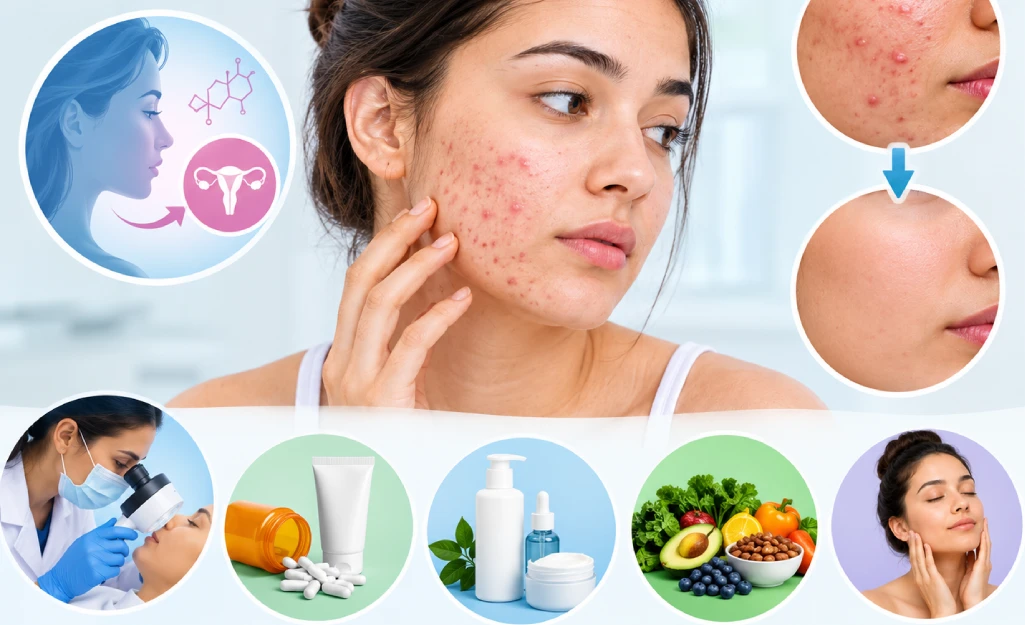
Hormonal acne can be particularly frustrating because it often does not behave like an occasional breakout. The pimples may keep returning in the same areas, become painful or deep, and continue even when you are following a fairly consistent skincare routine. For many adults, especially women, the pattern can also seem connected to periods, stress or other hormonal changes.
“When I see a patient with recurring acne, I don’t want to simply treat the pimple in front of me. I want to understand why the acne keeps coming back.” — Dr. Ravikant Chauhan, Dermatologist, Neotis Skin Care Clinic, Bengaluru.
With an MBBS and DDVL and a special interest in dermatology, dermatosurgery and cosmetic dermatology, Dr. Ravikant Chauhan takes a comprehensive approach to skin concerns at Neotis Skin Care Clinic, Kalyan Nagar, Bengaluru.
In hormonal acne, this approach becomes particularly important because contr4olling the underlying triggers can be just as important as treating the visible breakouts.
What Is Hormonal Acne?
Hormonal acne refers to acne that is influenced by hormonal activity, particularly hormones called androgens that can increase oil production and contribute to clogged pores and inflammation.
It commonly appears as:
- Deep or tender pimples
- Recurrent breakouts around the chin and jawline
- Acne on the lower face and neck
- Breakouts that become worse around periods
- Acne that persists into adulthood
- Recurring lesions in the same areas
However, not every pimple around the jawline is automatically hormonal acne.
“The location of acne can give us a clue, but diagnosis should never be based on location alone. I look at the patient’s complete history, the pattern of breakouts, severity and other symptoms before deciding whether hormones are actually playing a significant role.” — Dr. Ravikant Chauhan
Why Does Hormonal Acne Keep Coming Back?
Hormonal acne can be persistent because the underlying hormonal influence continues even after an individual pimple has healed.
Androgens can increase sebum production. Excess oil, together with dead skin cells, can contribute to blocked pores. Inflammation then creates the red, swollen or painful lesions associated with acne.
Other factors can contribute to worsening acne, including:
- Stress
- Certain medications
- Genetics
- Skincare or cosmetic products that clog pores
- Hormonal fluctuations
- Conditions associated with hormonal imbalance
This is why repeatedly treating individual pimples without addressing the broader pattern may not provide lasting control.
How Patients With Suspected Hormonal Acne Are Treated
“The first consultation is important because I need to understand the acne beyond what is visible on the skin.” — Dr. Ravikant Chauhan
During an evaluation, a dermatologist may consider:
- When the acne started
- Where it appears
- Whether it follows a recurring pattern
- Whether breakouts coincide with periods
- Whether the lesions are painful or deep
- Previous acne treatments
- Medications and supplements
- Menstrual and hormonal history where relevant
- Signs that may suggest an underlying hormonal condition
Not every patient requires extensive hormonal testing. Investigations are generally considered when the history or examination suggests that they may be useful.
What Are the Treatment Options for Hormonal Acne?
Treatment depends on the severity of acne, the patient’s age, skin type, medical history and whether there are signs of an underlying hormonal problem.
1. Topical Retinoids
Topical retinoids help prevent clogged pores and can reduce inflammation. They are commonly used as part of an acne treatment plan and may also help maintain clearer skin once acne is controlled.
Dr. Ravikant’s perspective:
“A common mistake is expecting a topical treatment to work overnight. Acne treatment is usually a process. Consistency is much more important than constantly changing products.”
2. Benzoyl Peroxide
Benzoyl peroxide helps reduce acne-causing bacteria and is frequently combined with other acne medications. Current acne guidelines strongly recommend it as an effective topical treatment.
It may be particularly useful when inflammatory pimples are present.
3. Salicylic Acid and Azelaic Acid
Salicylic acid can help unclog pores, while azelaic acid can address acne, inflammation and post-acne dark spots.
These may be useful components of a treatment plan depending on the patient’s skin and the type of acne present.
4. Oral Medications
For moderate or persistent acne, topical treatment alone may not be enough.
A dermatologist may consider oral antibiotics for appropriate patients, usually for a limited duration and alongside topical treatments. The current AAD guidelines emphasize limiting systemic antibiotic use and combining antibiotics with benzoyl peroxide to reduce antibiotic resistance.
5. Hormonal Treatment
For appropriately selected women with persistent hormonal acne, hormonal therapies such as combined oral contraceptives or spironolactone may be considered.
Spironolactone can be particularly useful for women with persistent acne involving the lower face, jawline or neck. It requires medical supervision and is not appropriate for everyone.
“Hormonal medication is not something I would recommend simply because someone has acne. We first need to determine whether the patient is an appropriate candidate, understand their medical history and then discuss the benefits and potential risks.” — Dr. Ravikant Chauhan
What Dermatology Procedures Can Help Hormonal Acne?
Medication forms the foundation of treatment for many patients, but dermatology procedures can also have an important role in managing selected types of acne.
The procedure is chosen according to whether the patient has active inflammatory acne, clogged pores, cystic lesions, pigmentation or early scarring.
Chemical Peels
Medical-grade chemical peels, including salicylic acid-based peels, can help exfoliate the skin, unclog pores and reduce excess oil.
They may be considered for patients with acne-prone skin, particularly when comedones and superficial inflammatory lesions are present.
At Neotis Skin Care Clinic, chemical peels may be incorporated into an acne treatment plan when considered appropriate after dermatological assessment.
Acne Scar Procedures
If hormonal acne has already resulted in textural scarring, treating the active acne alone may not be enough.
Once acne is adequately controlled, procedures such as microneedling, fractional laser, subcision or other scar-focused treatments may be considered depending on the type of scar.
These procedures are generally aimed at improving the appearance of established scars rather than treating the underlying hormonal cause of acne.
Laser and Light-Based Procedures
Selected laser or light-based treatments may be used as an adjunct to conventional acne management. Their suitability depends on the type of acne, skin tone, severity and the patient’s overall treatment plan.
They should not automatically be considered a replacement for medical acne treatment.
“Procedures can be useful, but I don’t believe every acne patient needs a procedure. The important question is whether the procedure addresses the patient’s actual concern and whether it fits into the overall treatment plan.” — Dr. Ravikant Chauhan
Which Treatment Is Right for Hormonal Acne?
There is no single best treatment for hormonal acne.
A patient with mild recurring breakouts may need a topical regimen, while someone with painful cystic acne may require oral medication or hormonal therapy. Chemical peels or acne-focused procedures may be added when they provide a specific benefit.
The dermatologist’s role is to bring these options together into a treatment plan that addresses active acne, the underlying triggers, excess oil, inflammation and the risk of scarring rather than treating every breakout as an isolated problem.
Can Hormonal Acne Cause Acne Scars?
Yes.
Deep, inflamed or repeatedly recurring acne can damage the skin and increase the risk of permanent acne scarring. Picking or squeezing lesions can make this worse.
This is why early treatment matters.
“If acne is deep, painful or repeatedly leaving marks, I would rather see the patient early than wait until significant scarring has developed. Treating the acne itself is the first step towards preventing a much more difficult scar-treatment journey later.” — Dr. Ravikant Chauhan
When Should You See a Dermatologist?
Consider professional evaluation if:
- Your acne repeatedly appears around the jawline or chin.
- Breakouts become worse around your menstrual cycle.
- You develop painful or deep pimples.
- Acne continues well into adulthood.
- You are developing acne scars.
- Over-the-counter products are not controlling the breakouts.
- Your acne suddenly becomes much worse.
- You have other symptoms that could indicate a hormonal problem.
A dermatologist can determine whether the acne is actually hormonally influenced and whether further evaluation is necessary.
Dr. Ravikant Chauhan on Treating Hormonal Acne
“My approach to hormonal acne is to look at the patient, not just the acne.”
According to Dr. Ravikant Chauhan, successful acne treatment should balance three goals: control existing acne, prevent new breakouts and minimize the risk of long-term scarring.
That means there is no universal prescription for hormonal acne. One patient may need topical therapy, another may benefit from oral medication, while someone with severe or persistent acne may require a more comprehensive treatment strategy.
At Neotis Skin Care Clinic, Kalyan Nagar, Bengaluru, the emphasis is on dermatological assessment and individualized treatment rather than simply adding more products or procedures. The clinic provides acne-focused treatments including medical management and selected chemical-peel and procedural interventions.
“If your acne keeps returning despite your efforts, don’t assume that you simply need a stronger skincare product. Sometimes the answer is understanding what is driving the acne in the first place.” — Dr. Ravikant Chauhan
Frequently Asked Questions
Can hormonal acne start after the age of 25?
Yes. Acne can persist or develop during adulthood, and hormonal influences can play a role in some patients.
Does eating chocolate cause hormonal acne?
There is no simple food that can be identified as the sole cause of hormonal acne. Diet may influence acne in some individuals, but treatment should not be based on eliminating one food alone.
Can stress make hormonal acne worse?
Stress can influence several processes involved in acne and may coincide with worsening breakouts. Managing stress can therefore be useful as part of an overall acne-care routine.
Should I stop using makeup if I have hormonal acne?
Not necessarily. Choose non-comedogenic products and remove makeup thoroughly rather than avoiding makeup altogether.
Can hormonal acne disappear on its own?
It can improve with time, but persistent or severe acne may continue and can leave scars. Early dermatological treatment can help control it and reduce complications.
Can hormonal acne be completely cured?
Hormonal acne can often be controlled very effectively, but some patients may experience recurring breakouts when treatment is stopped or hormonal influences change. Long-term management is sometimes necessary.
